

If you’ve ever searched for web hosting recommendations, chances are Bluehost appeared almost immediately. It’s one of the most widely promoted hosting providers on the internet, often recommended for beginners and WordPress users.
What Is Bluehost Hosting? A Quick Overview of the Provider
Before evaluating performance and pricing, it helps to understand what Bluehost actually is and how it fits within the broader web hosting industry.
Bluehost is a web hosting provider that offers infrastructure for running websites online. When you purchase hosting from Bluehost, your website’s files are stored on servers connected to the internet, allowing visitors to access your site at any time.
From my perspective, Bluehost positions itself primarily as a beginner-friendly hosting platform. The interface, onboarding process, and marketing all focus on making website creation easier for people who may not have technical experience.
At the same time, analysts often point out that Bluehost operates within a much larger hosting ecosystem, which means its strengths and limitations should be considered within that broader context.
Company Background and Ownership
Bluehost was founded in 2003 and quickly grew into one of the most recognized web hosting brands.
Today, it is owned by Newfold Digital, a company that manages several major hosting brands. This ownership structure has both advantages and criticisms.
On one hand, being part of a large technology group allows Bluehost to operate at scale with significant infrastructure resources. On the other hand, some industry observers believe that large hosting conglomerates sometimes prioritize marketing reach over technical innovation.
From my research into customer feedback, it’s clear that Bluehost’s popularity is influenced not only by its hosting services but also by its extensive affiliate partnerships and visibility in online tutorials.
Types of Hosting Services Bluehost Offers
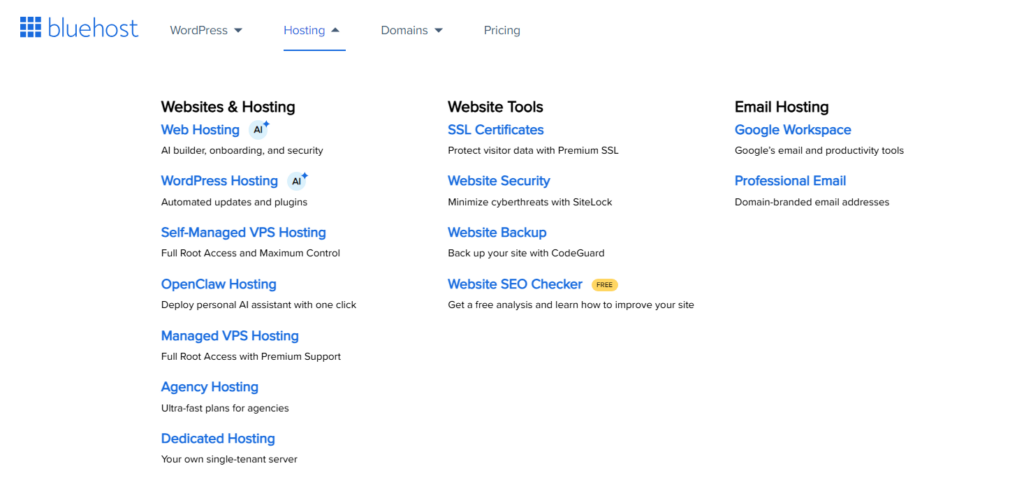
Bluehost offers several hosting categories designed to accommodate different website sizes and technical needs.
The primary hosting options include:
| Hosting Type | Typical Use Case | Description |
|---|---|---|
| Shared Hosting | Beginners and small sites | Multiple websites share one server environment |
| WordPress Hosting | WordPress websites | Hosting optimized specifically for WordPress |
| VPS Hosting | Growing websites | Virtual server with dedicated resources |
| Dedicated Hosting | High-traffic sites | Entire physical server dedicated to one user |
When I looked at Bluehost’s product structure, it became clear that the company focuses heavily on entry-level hosting. Most of their marketing highlights shared hosting and WordPress hosting because these services appeal to beginners launching their first website.
More advanced hosting tiers such as VPS and dedicated servers exist, but they are not the main focus of Bluehost’s brand identity.
Who Typically Uses Bluehost Hosting
From both personal research and analysis of user reviews, Bluehost tends to attract several types of website owners.
Common users include:
-
First-time website creators
-
Bloggers launching personal sites
-
Small businesses building their first online presence
-
WordPress users seeking simplified setup
These users often prioritize ease of use and affordability over deep technical control.
However, developers or companies managing complex applications sometimes prefer hosting providers that offer more advanced server configuration options.
Key Facts About Bluehost Hosting
Several key characteristics define Bluehost’s hosting model:
-
It provides shared, VPS, and dedicated hosting services
-
Many plans include a free domain for the first year
-
WordPress installation can be completed in minutes
-
Introductory pricing is typically discounted
-
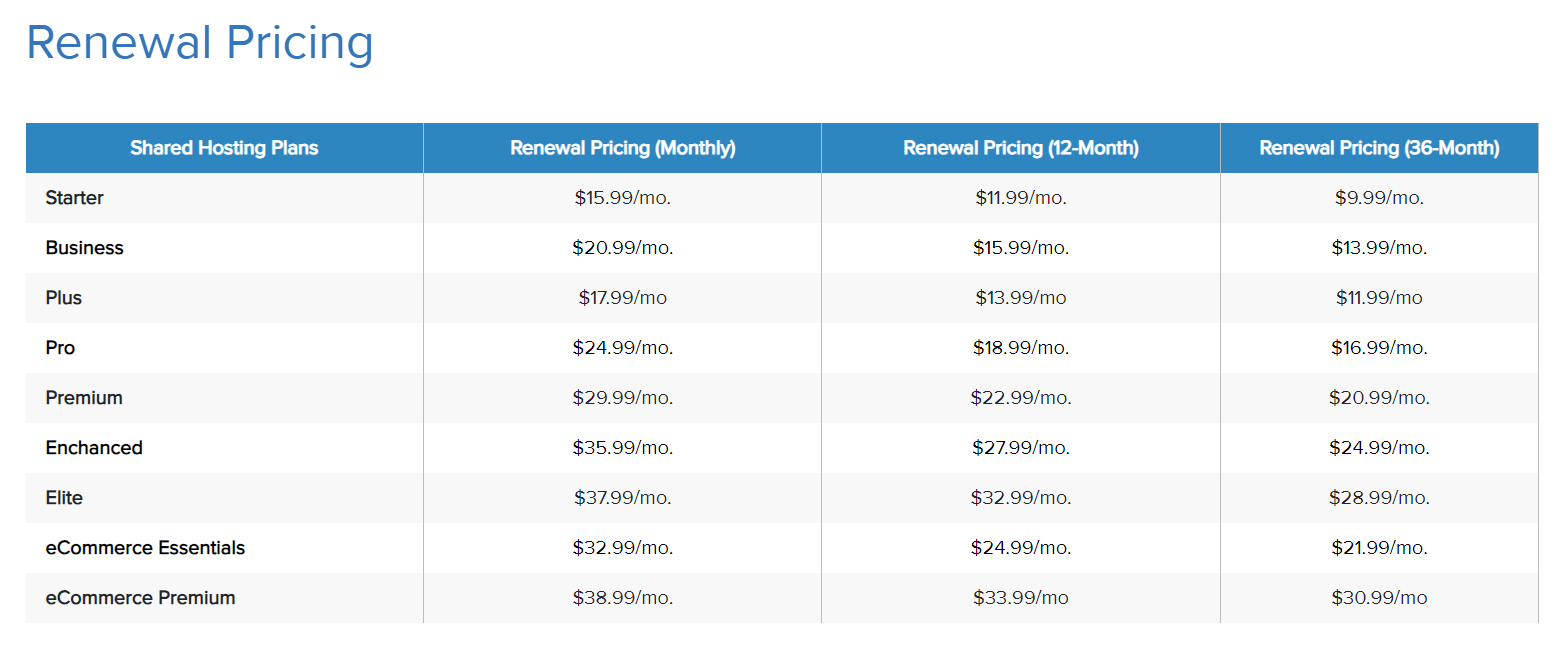
Renewal prices increase after the initial billing period
From my perspective, understanding these facts helps set realistic expectations before evaluating the service in more detail.
Bluehost Hosting Plans Explained: What Do You Actually Get?
Bluehost structures its services around several hosting tiers, each designed for different stages of website growth.
When reviewing the plans, I noticed that the company emphasizes simplicity over complexity. Rather than offering dozens of plan variations, Bluehost keeps its packages relatively straightforward.
This approach can make hosting decisions easier for beginners, although it may feel limiting for users who want more granular configuration options.
Overview of Bluehost Hosting Plans
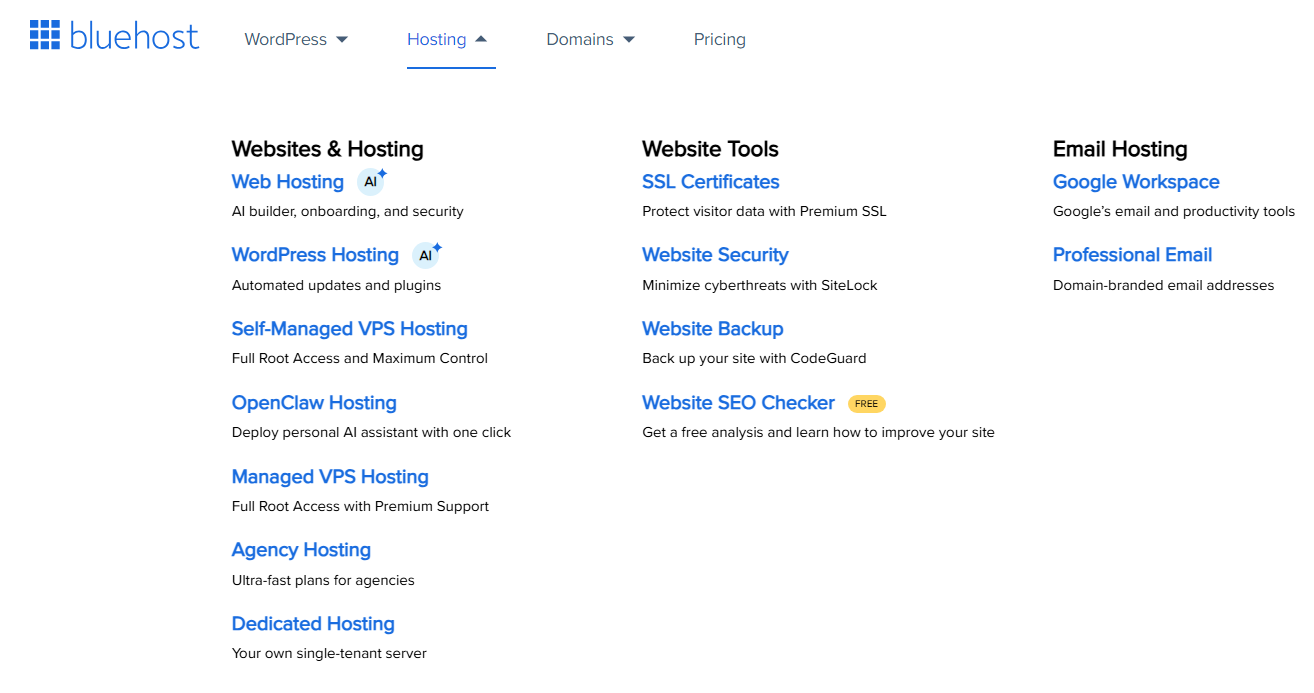
The main Bluehost hosting categories include:
-
Shared hosting
-
WordPress hosting
-
VPS hosting
-
Dedicated hosting
Each plan type differs in server resources, customization options, and price.
For many beginners, shared hosting is the starting point because it offers the lowest cost and simplest setup.
Shared Hosting
Shared hosting is Bluehost’s most popular product.
In a shared hosting environment, multiple websites operate on the same server infrastructure. While this approach keeps costs low, it also means server resources are shared among users.
From my observation, shared hosting works well for:
-
small blogs
-
personal websites
-
early-stage business websites
However, performance may fluctuate during periods of high server activity.
WordPress Hosting
WordPress hosting is essentially a version of shared hosting optimized specifically for WordPress websites.
Key features typically include:
-
preinstalled WordPress
-
automated updates
-
WordPress-specific support tools
Since WordPress powers a large percentage of websites on the internet, Bluehost’s strong focus on this platform makes sense from a business perspective.
VPS Hosting
VPS hosting provides a virtual private server environment.
Compared with shared hosting, VPS plans offer:
-
dedicated server resources
-
improved performance
-
greater control over server settings
While reviewing Bluehost’s VPS offerings, I noticed they target websites that have outgrown shared hosting but do not yet require a dedicated server.
Dedicated Hosting
Dedicated hosting gives customers an entire physical server.
This type of hosting is typically used by:
-
high-traffic websites
-
large eCommerce platforms
-
enterprise applications
Dedicated hosting offers maximum performance and control, but it also requires a higher budget and technical management.
Bluehost Pricing Review: Is It Really Affordable?

Many hosting advertisements highlight very low introductory prices, which can make the service appear extremely affordable at first glance.
However, after reviewing Bluehost’s pricing structure more carefully, it becomes clear that the long-term cost is slightly more complex.
Introductory Pricing vs Renewal Costs
Like many hosting companies, Bluehost offers introductory discounts for new customers.
These promotional rates apply during the initial subscription term. After that period ends, the plan renews at the standard price.
From my perspective, this pricing model is not unusual in the hosting industry, but it’s something new users should understand before signing up for multi-year plans.
For example, a hosting plan that appears very inexpensive during the promotional period may cost significantly more when it renews.
Hidden Costs Users Should Know
Another factor that appears in many user reviews involves add-on services.
During the signup process, Bluehost offers optional features such as:
-
domain privacy protection
-
automated backups
-
enhanced security tools
These services can be useful, but they also increase the overall hosting cost if selected.
In my experience reviewing hosting platforms, this upsell structure is common across the industry.
Value for Money Compared to Features Offered
When evaluating value for money, Bluehost performs reasonably well for beginners.
Users receive:
-
hosting infrastructure
-
domain registration for the first year
-
SSL encryption
-
website management tools
For small websites or blogs, these bundled features can simplify the setup process.
However, more demanding websites may eventually require higher-performance hosting solutions.
Money-Back Guarantee and Refund Policy
Bluehost generally offers a 30-day money-back guarantee on many hosting plans.
This allows users to test the service before fully committing to long-term usage.
However, certain add-on services and domain registrations may not be refundable.
Bluehost Speed, Uptime, and Reliability Analysis:
Bluehost speed and performance are most advertised along with strong uptime and reliable infrastructure, but as with most shared hosting platforms, real-world performance can depend on several variables such as server load, website optimization, and the specific hosting plan chosen.
Bluehost Uptime Performance
Uptime refers to the amount of time a website remains accessible online without interruption.
Bluehost generally aims to maintain uptime around 99.9%, which is a common industry benchmark. For most small websites, this level of uptime is considered acceptable because it means downtime is limited to a few minutes per month on average.
From what I observed while researching user feedback and performance reports, uptime stability tends to be reasonably consistent for typical blogs and small business sites. However, websites hosted on entry-level shared servers may occasionally experience short outages or temporary slowdowns during peak traffic periods.
Industry analysts often point out that shared hosting environments naturally involve resource sharing between multiple websites. Because of that, performance consistency can sometimes fluctuate compared with higher-tier hosting solutions.
Website Speed and Server Response Time
Website speed is another factor that influences both user experience and search engine visibility.
In my experience reviewing hosting platforms, speed depends not only on the server infrastructure but also on how well the website itself is optimized. Bluehost servers generally deliver acceptable loading speeds for smaller sites, especially when combined with caching plugins or content delivery networks.
However, websites with heavier themes, large images, or high traffic volumes may require additional optimization or upgraded hosting plans to maintain faster load times.
Some technical factors that influence Bluehost speed include:
-
server hardware and configuration
-
location of data centers
-
website caching settings
-
the amount of shared server traffic
These variables mean that speed results can vary from one website to another.
Overall Reliability for Different Website Types
From a practical perspective, Bluehost reliability depends heavily on the type of website being hosted.
For example:
-
Personal blogs and portfolio websites generally run smoothly on shared hosting.
-
Small business websites often perform well with entry-level plans when traffic remains moderate.
-
High-traffic websites or large online stores may require VPS or dedicated hosting to maintain consistent performance.
In my view, Bluehost reliability is sufficient for many smaller projects. However, websites expecting rapid growth should consider scalability when choosing a hosting plan.
User Review: Matthew Burpee – CA
My remaining sites on Bluehost now go down daily, sometimes for hours at a time. Although Bluehost has offered a discount on renewal, they have not allowed me to move to a more reliable server with higher uptime, even after I upgraded to a higher-tier plan over a year ago.
Bluehost Features Review: Tools That Matter for Website Owners
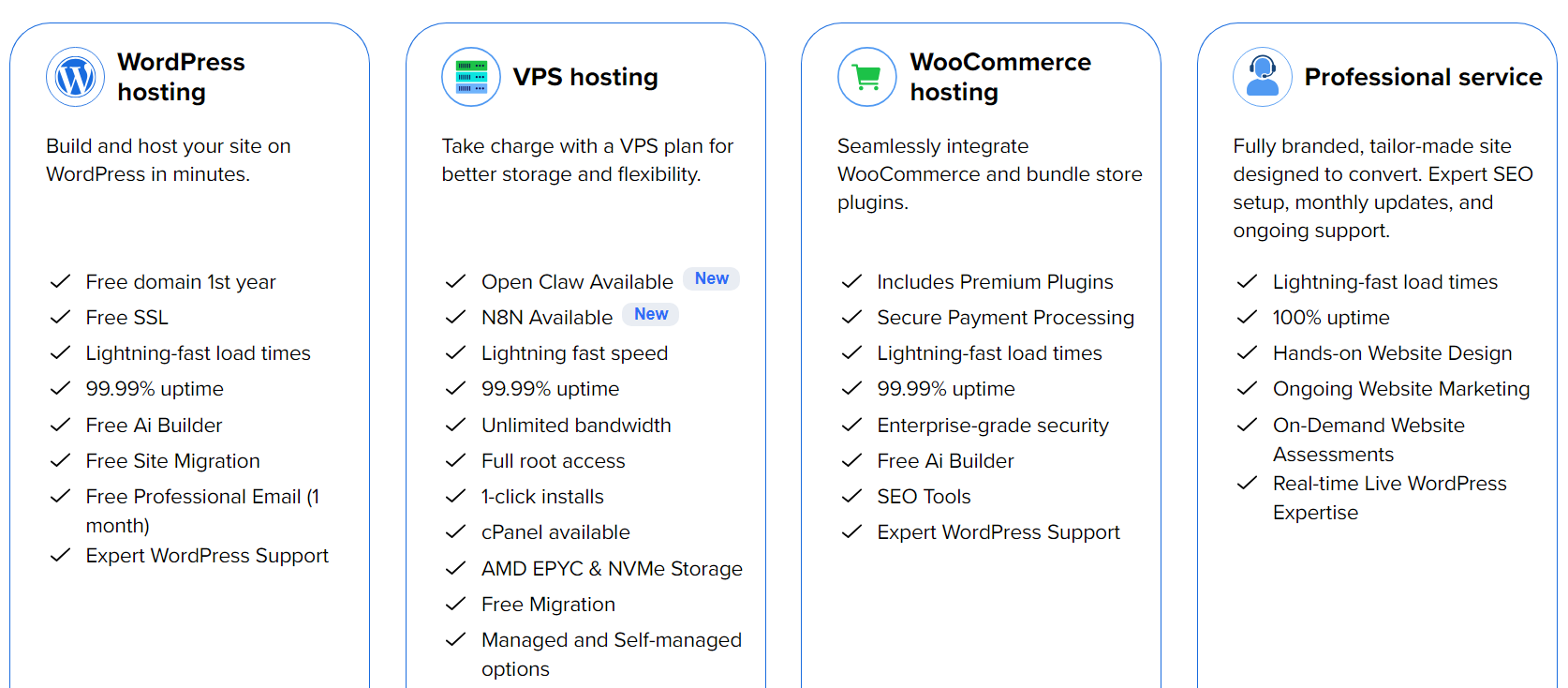
When I explored Bluehost’s interface and available tools, the platform clearly focuses on simplifying website management for beginners. The design of the dashboard and setup process reflects this goal.
Control Panel and Ease of Use
Bluehost provides a custom hosting dashboard that combines traditional hosting controls with simplified website management tools.
In my experience navigating the platform, the interface is relatively easy to understand, even for users who have never managed a hosting account before. Tasks such as installing applications, managing domains, and configuring email accounts can be completed from the main dashboard.
This user-friendly approach is one of the reasons many beginners feel comfortable starting their first website with Bluehost.
WordPress Integration and Setup
One of Bluehost’s most widely promoted features is its integration with WordPress.
WordPress can typically be installed with just a few clicks through the Bluehost dashboard. Once installed, users can begin customizing their website using themes, plugins, and built-in content management tools.
Third-party analysts often note that Bluehost’s WordPress integration is one of its strongest advantages, particularly for users who want a straightforward setup process.
Security Features and Backup Options
Security is another important aspect of website hosting.
Most Bluehost plans include basic security tools such as:
-
SSL certificates for encrypted connections
-
server monitoring
-
spam protection tools
Additional security features, including advanced malware protection or automated backup services, may be offered as optional upgrades.
From my perspective, the inclusion of basic security tools is helpful, but website owners should still consider implementing additional security measures depending on their needs.
User Review: Diana Dunlop – US
There were also several other problems over the years: security breaches affecting hosted websites, file management anomalies on the server, services that were purchased but never actually usable (such as the CodeGuard backup system), and most seriously, major issues with email delivery.
Website Builder and Design Tools
Bluehost also offers a website builder designed for users who prefer visual editing rather than manual coding.
These builders allow website pages to be created using drag-and-drop elements such as text blocks, images, and contact forms.
While experienced developers may prefer more flexible development environments, visual website builders can significantly reduce the learning curve for beginners launching their first site.
User Review: Raj Baldania – IN
Another problem with Bluehost is that their WordPress installs come with their own AI site builder and several bundled plugins that feel like bloatware. I had a WooCommerce site on their shared hosting that struggled with performance, but the exact same site runs perfectly fine on SiteGround at a similar price.
Bluehost Customer Support and Service Quality Evaluation

Customer support often becomes important only when something goes wrong. In hosting environments, that moment inevitably happens at some point—whether it’s a technical issue, a configuration problem, or a billing question.
Bluehost advertises 24/7 customer support, which is a standard feature for most major hosting providers.
Support Channels Available
Bluehost offers several support channels, including:
-
live chat support
-
phone support
-
ticket-based assistance
-
help center documentation
During my research, I noticed that the company’s knowledge base contains a large collection of guides covering common website management tasks.
For users who prefer solving problems independently, these resources can often provide quick answers without contacting support directly.
Response Time and Support Experience
Support response time appears to vary depending on the complexity of the issue and overall support demand.
For simple questions related to account setup or billing, responses are usually relatively quick. More complex technical problems may require longer troubleshooting times.
In my view, Bluehost support works reasonably well for basic hosting assistance. However, users dealing with advanced technical configurations may occasionally need additional patience while issues are investigated.
User Review: Emma – GB
Ive tried logging into my account but you keep bouncing me back to live chat or saying my passwords wrong which it isn’t. As its the same for everything. Id like a speedy response.
Common Support Concerns in User Reviews
Some customer reviews mention challenges such as:
-
longer response times during busy periods
-
difficulty resolving complex technical issues
-
upselling additional services during support interactions
These concerns are not unique to Bluehost. Many large hosting companies receive similar feedback due to the sheer scale of their customer base.
Overall, support experiences vary widely between users.
User Review: Merlin Wyman – US
Usually, I get great customer support from Bluehost. This was the first time I tried it via Chat at night, and it was horrible. A couple of hours of wasted time, filled with long holds where I didn’t know if the person was still there. Finally called the next morning to get through to a live person, and the issue was quickly fixed. And by the way, inserting an AI now that I have to get through before it will connect me with a person is a real thumbs down.
Bluehost Pros and Cons for Website Hosting in 2026
After reviewing Bluehost’s infrastructure, pricing structure, and user feedback, several advantages and limitations become clear.
Advantages of Bluehost Hosting
From my perspective, Bluehost offers several benefits that explain its continued popularity.
Some of the most notable strengths include:
-
beginner-friendly dashboard and setup process
-
integrated WordPress installation tools
-
bundled domain registration with certain plans
-
widely available support documentation
These features make Bluehost accessible for people launching their first website without prior technical experience.
Limitations and Drawbacks to Consider
At the same time, there are a few drawbacks worth mentioning.
Some limitations include:
-
higher renewal pricing after the introductory term
-
optional add-ons that increase total cost
-
performance limitations on entry-level shared hosting plans
Industry observers frequently note that shared hosting environments naturally have resource constraints, which can affect performance under heavy traffic conditions.
Situations Where Bluehost May Not Be Ideal
While Bluehost works well for many beginner projects, it may not always be the best choice for every situation.
For example, developers managing complex applications or websites expecting extremely high traffic might prefer hosting providers with more customizable server environments.
Understanding these limitations helps create realistic expectations before choosing a hosting plan.
Real Bluehost Customer Reviews and User Experiences
Customer reviews often reveal insights that technical specifications alone cannot show.
When analyzing feedback from various review platforms, I noticed that Bluehost experiences tend to fall into two main categories: positive experiences related to ease of use and mixed feedback regarding pricing and support.
Positive Feedback From Users
Many users appreciate Bluehost for its simplicity.
Some commonly mentioned benefits include:
-
easy WordPress installation
-
beginner-friendly dashboard
-
straightforward website setup process
For individuals launching their first website, these features can make the experience significantly less intimidating.
Common Issues Mentioned by Customers
However, some reviews also highlight challenges such as:
-
confusion about renewal pricing
-
additional charges for optional services
-
occasional performance limitations on shared hosting
These concerns appear most frequently among users who expected the introductory pricing to remain unchanged after renewal.
Real-World Scenario Example
While reviewing hosting experiences, I came across a common situation that many website owners describe.
User Review: Jasma BVB – HR
It’s not just worst service and experience, it’s most annoying experience for us as small business.
First of all, they charge you even if you have no automatic payments ON. Once you complain they crashing your web purposely and pushing you to pay more for working web but fortunately they are not only on the market.
In this review, the customer clearly expresses strong dissatisfaction with the service, especially from a small business perspective. They highlight unexpected charges despite not enabling automatic payments, which immediately creates a sense of mistrust. The frustration escalates when they describe their website crashing after raising a complaint, suggesting they felt pressured or unfairly treated. Overall, the tone and choice of words like “most annoying experience” reflect how deeply dissatisfied and helpless the customer felt, ultimately emphasizing a lack of reliability and professionalism in the service.
Bluehost Hosting for Beginners and Businesses – Honest Review
When evaluating Bluehost objectively, it becomes clear that the platform serves a particular segment of the hosting market.
Who Bluehost Is Best Suited For
In my opinion, Bluehost works particularly well for:
-
beginners creating their first website
-
bloggers starting personal projects
-
small businesses launching basic websites
The simplified interface and automated WordPress setup tools remove many of the technical barriers that often discourage new website owners.
Who May Want to Consider Other Hosting Options
More experienced developers sometimes prefer hosting environments that offer deeper control over server configurations, development environments, and performance optimization.
For example, websites with heavy traffic, complex applications, or advanced development workflows may benefit from more specialized hosting platforms.
Key Considerations Before Choosing Bluehost
Before selecting Bluehost—or any hosting provider—it’s helpful to consider:
-
expected website traffic
-
technical experience level
-
long-term hosting budget
-
scalability requirements
Evaluating these factors can help determine whether Bluehost aligns with the website’s long-term needs.
Final Verdict: Is Bluehost the Best Web Hosting or Overrated?
After analyzing Bluehost’s features, pricing structure, and real customer feedback, the answer is not entirely straightforward.
From my perspective, Bluehost is neither a perfect hosting solution nor an overrated platform. Instead, it occupies a middle position in the hosting market.
For beginners launching their first website, Bluehost offers a practical combination of affordability, ease of use, and WordPress integration. These strengths explain why the service continues to appear frequently in hosting recommendations.
However, as websites grow or technical requirements increase, some users may find that more specialized hosting solutions provide better performance or flexibility.
In other words, Bluehost can be an effective starting point—but it may not always remain the ideal long-term hosting solution for every project.
User Review: Giovanni Colangelo – IT
Over the years I hosted several websites and services related to real businesses on Bluehost, so server stability, email deliverability, and overall infrastructure reliability were critical. Instead, I found myself dealing with a long series of technical issues, most of which were clearly related to the provider’s infrastructure.
Conclusion
This Bluehost review explored the hosting platform’s speed, uptime, features, pricing structure, and real user experiences to provide a balanced perspective.
From my research and evaluation, Bluehost remains a widely used hosting provider largely because it simplifies website creation for beginners. The platform offers an accessible interface, integrated WordPress tools, and affordable introductory pricing that makes it attractive for new website owners.
At the same time, potential users should be aware of factors such as renewal pricing increases, optional add-on services, and performance limitations associated with shared hosting environments.
Ultimately, Bluehost can serve as a practical starting point for many websites, particularly blogs and small business sites. For projects that demand higher performance or advanced customization, exploring additional hosting options may also be worthwhile.
The key takeaway is simple: choosing the right hosting provider depends less on popularity and more on how well the platform fits the specific needs of your website.
Frequently Asked Questions
Is Bluehost good for beginners in 2026?
Yes. Bluehost remains beginner-friendly due to its simplified dashboard, WordPress integration, and guided setup process for launching new websites.
Why does Bluehost pricing increase after renewal?
Bluehost offers promotional introductory prices for the first billing term. After that period ends, plans renew at the standard rate.
Does Bluehost provide reliable uptime?
Most hosting environments aim for uptime around 99.9%. Bluehost generally performs within this range, though performance can vary by hosting plan.
Is Bluehost suitable for WordPress websites?
Yes. Bluehost provides integrated WordPress installation and hosting features that simplify setup for WordPress users.
Does Bluehost include a free domain?
Many Bluehost plans include a free domain registration for the first year when signing up for hosting.
Can Bluehost handle growing website traffic?
Entry-level shared hosting can support small websites, but larger sites may need VPS or dedicated hosting plans as traffic grows.
What should users check before choosing Bluehost?
Users should evaluate renewal pricing, hosting plan limitations, expected website traffic, and the need for additional features like backups or security tools.