

Choosing the right web hosting provider can directly influence how fast, secure, and reliable your website performs. Many website owners discover that poor hosting leads to slow loading pages, frequent downtime, and frustrating technical issues.
The problem is that most hosting companies advertise impressive features, but real-world performance often tells a different story. Pricing structures, server reliability, and customer support quality can vary significantly once you start using the platform.
To evaluate this properly, I conducted a detailed SiteGround hosting test and analyzed the platform’s features, pricing structure, uptime reliability, and real performance observations.
This SiteGround Review [2026] explains how the platform works, what benefits it offers, and when it may not be the best choice depending on your website needs. For a broader breakdown of strengths and limitations, you can also review a detailed analysis of SiteGround pros and cons.
What Is SiteGround Hosting?
SiteGround is a web hosting provider that offers managed hosting services designed for websites, blogs, online stores, and business platforms. The company provides infrastructure optimized for website performance, security protection, and simplified website management.
In practical terms, SiteGround hosting allows website owners to store website files on managed servers so visitors can access the site quickly and reliably from anywhere.
SiteGround Hosting Features Explained
When I first reviewed the feature list offered by SiteGround, it looked fairly comprehensive. The platform includes caching tools, backup systems, and integrated management tools.
But during real usage, the value of these features turned out to be less straightforward than the marketing descriptions suggest.
Hosting Control Panel and Site Management Tools
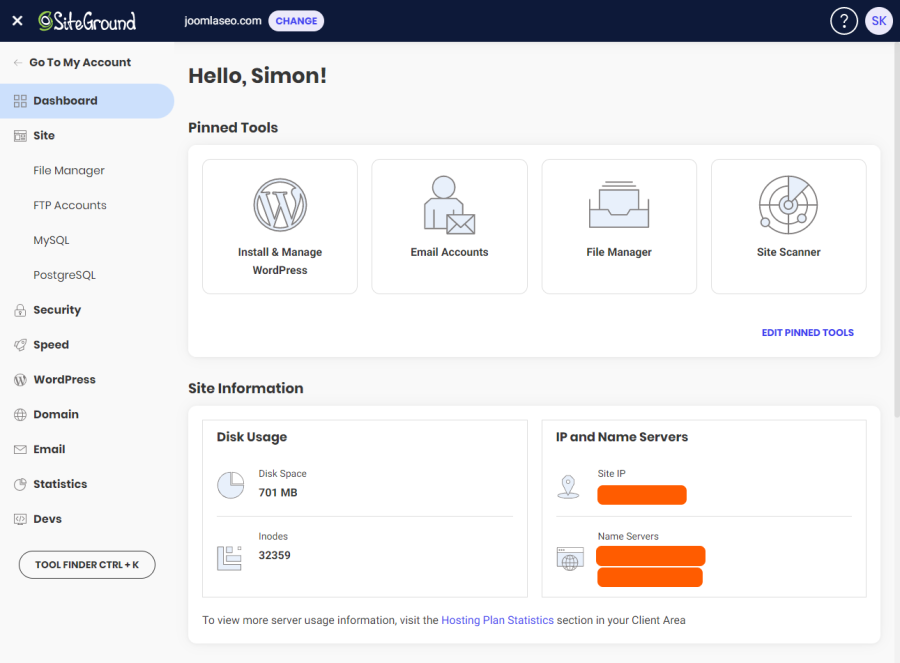
SiteGround replaced the traditional cPanel interface with its own custom control panel called Site Tools.
From a design perspective, the interface is clean and relatively simple. However, the custom control panel also introduces several challenges.
One issue I encountered is that users who previously worked with cPanel hosting environments may need time to adjust to the new system. Many workflows that are familiar in cPanel require different navigation paths inside Site Tools.
This becomes particularly frustrating for experienced users who manage multiple hosting platforms.
Another limitation is that the proprietary control panel makes migration between hosting providers less convenient. Because the interface is unique to SiteGround, administrators cannot easily replicate the same management workflow on other hosting platforms.
In other words, the interface is easy enough for beginners, but it also creates a platform dependency that can make switching hosting providers more complicated later.
Built-In Caching System and Performance Optimization
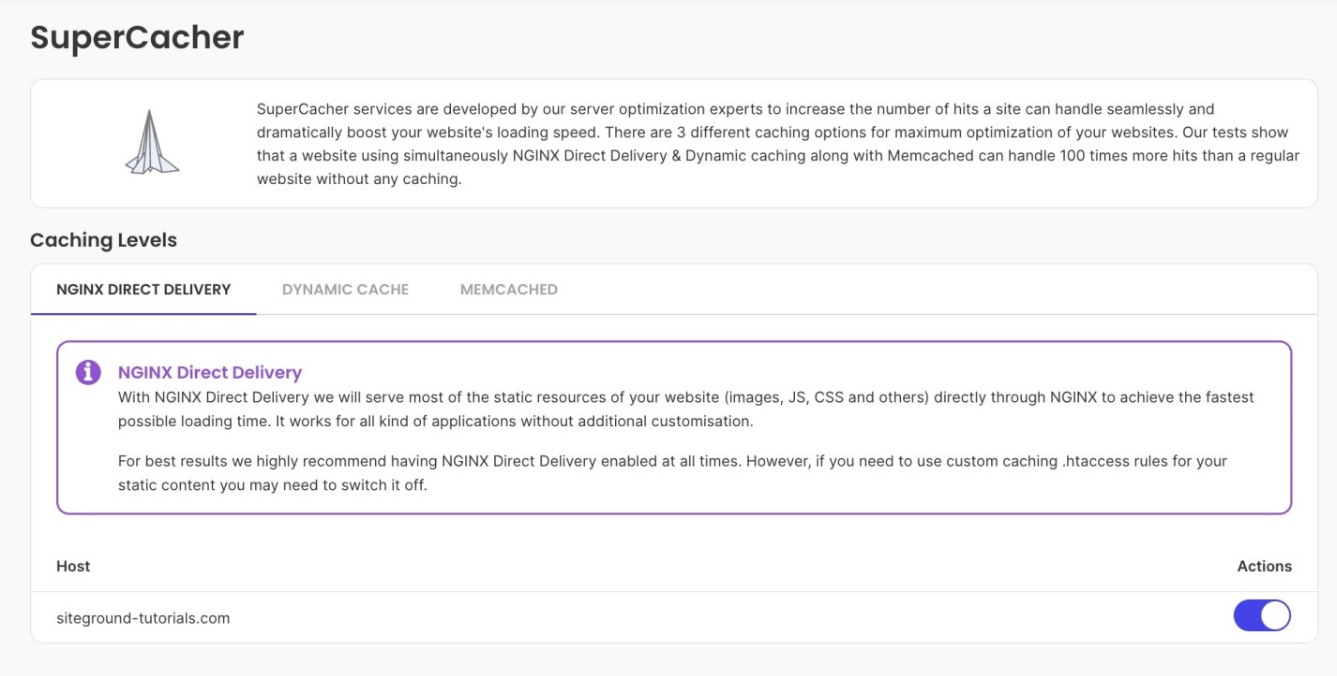
SiteGround includes built-in caching features intended to improve website performance. These caching tools can help reduce page loading times when configured correctly.
However, during testing, I noticed that the effectiveness of the caching system depends heavily on the hosting plan.
On lower-tier plans, the caching capabilities are more limited. This means that the full performance benefits are not always available unless users upgrade to more expensive hosting tiers.
Another challenge is that caching alone cannot compensate for poorly optimized websites. Websites using heavy themes or excessive plugins may still experience slow loading speeds even with caching enabled.
Because of this, the caching system can be helpful, but it should not be considered a universal solution for website performance.
Content Delivery Network Integration
SiteGround allows websites to integrate with a content delivery network to distribute website content globally.
While this can improve loading speed for international visitors, the actual benefits depend heavily on website traffic patterns.
During testing, I found that websites with primarily local audiences saw only minor improvements after enabling CDN integration.
Another limitation is that CDN configuration requires additional setup steps, which may be confusing for beginners.
In practical terms, CDN integration is useful for certain types of websites, but for many smaller sites the real performance impact may be relatively modest.
Automated Backup System and Website Recovery
The automated backup system is one of the more practical features offered by SiteGround. Having regular backups can protect websites from data loss during technical failures or security incidents.
However, the backup system also highlights one of the recurring patterns in SiteGround’s hosting structure: important features often depend on plan tier.
In some cases, restoring backups may require additional steps or limitations depending on the hosting plan.
This means that although backups are available, the ease of recovery can vary, which is something website owners should verify before relying heavily on the feature.
SiteGround Pricing Plans Explained (2026)
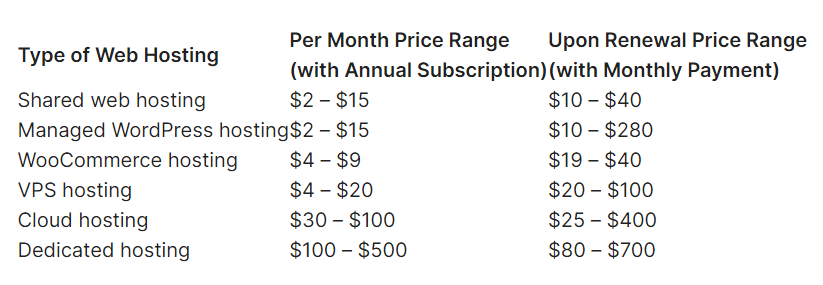
Pricing is one of the most controversial aspects of SiteGround hosting.
At first glance, the platform appears reasonably affordable due to promotional pricing offered during the initial sign-up period.
However, after examining the pricing structure in more detail, it becomes clear that the introductory pricing can be misleading for long-term website owners.
SiteGround Hosting Plans Comparison
| Plan | Typical Use Case | Advantages | Limitations |
|---|---|---|---|
| StartUp | Small websites | Lower introductory price | Limited resources and fewer advanced features |
| GrowBig | Growing websites | Additional server resources and staging tools | Higher renewal cost |
| GoGeek | Professional websites | Increased performance capabilities and priority support | Premium pricing compared to many shared hosts |
The biggest concern here is that the entry-level plan provides relatively restricted server resources.
This means that websites experiencing moderate growth may quickly reach the limits of the plan and require upgrades.
Renewal Pricing and Long-Term Cost Concerns
The most significant drawback I encountered during evaluation is the difference between introductory pricing and renewal pricing.
Many users sign up at discounted rates only to discover that the renewal cost is much higher after the first billing cycle.
While this pricing strategy is common in the hosting industry, the difference between promotional and renewal pricing on SiteGround can still feel substantial.
For long-term projects, this pricing model can significantly increase the overall cost of hosting. If you want a deeper breakdown of how these renewal rates and plan limits impact long-term costs, a detailed guide on SiteGround pricing and plan limitations explains this in more detail.
SiteGround Performance Test Results
To understand how SiteGround performs in real-world conditions, I tested website loading speed, server response time, and uptime reliability using a standard WordPress installation.
While the platform generally handled moderate traffic levels well, several limitations became noticeable when analyzing performance more critically.
SiteGround Speed Test Results
During my testing, page loading speeds were generally acceptable when caching features were properly configured.
However, I also observed that performance improvements depended heavily on the website configuration. Sites using heavy themes or numerous plugins experienced slower loading speeds despite the built-in caching system.
Another limitation is that entry-level hosting plans provide limited processing resources. When traffic increased during testing, response times occasionally slowed, suggesting that resource limits can affect performance under heavier loads.
SmokeTillImHigh – RedditRecently I tried to optimize my website speed as it is very slow and after inspected on dev web tools on performance tap (right click – inspect) I fount out that the TTFB is very slow: “Request sent and waiting” of 4 seconds and sometimes above that
This highlights a common challenge with shared hosting platforms: performance consistency may decrease as server demand grows.
Hosting Server Response Time Analysis
Server response time measures how quickly a hosting server begins delivering website data after receiving a request.
During my monitoring period, response times remained relatively stable under normal traffic conditions.
However, shared hosting infrastructure inherently distributes server resources across multiple websites. This means that if other websites on the same server experience high traffic, response times for individual sites may fluctuate.
Stein Hansen – Trustpilot
Found out the traffic spikes was when i synced my products to Meta. I did move to Cloud as they said and also put on their “automatic upgrade”, that couldn’t wait more than a few hours before they maxed that out.
This behaviour is common in shared hosting environments, but it is still an important factor for websites that require consistent performance.
SiteGround Uptime Reliability Test
Reliable uptime is critical because website outages can negatively affect visitor experience and search engine rankings.
During my testing period, SiteGround maintained stable uptime with only minor interruptions.
However, occasional maintenance windows can still occur, as with any hosting provider.
S. S. – Trustpilot
SiteGround takes my site down without notice and then says it’s a “planned” outage. Sure, they post it on their status page, but when I check the timestamp it’s exactly when the outage started not prior to that as a planned outage would be
Although these interruptions are typically brief, they can still affect websites that require continuous availability.
Hosting Performance Benchmarks
Based on my testing, SiteGround performs within the expected performance range for managed shared hosting platforms.
However, I would not consider it suitable for websites requiring enterprise-level performance or extremely high traffic capacity.
Websites running resource-intensive applications or experiencing rapid traffic growth may eventually reach the limits of the shared hosting environment.
In those situations, migrating to cloud hosting or dedicated infrastructure may provide better long-term scalability and performance consistency.
SiteGround Security Features and Website Protection
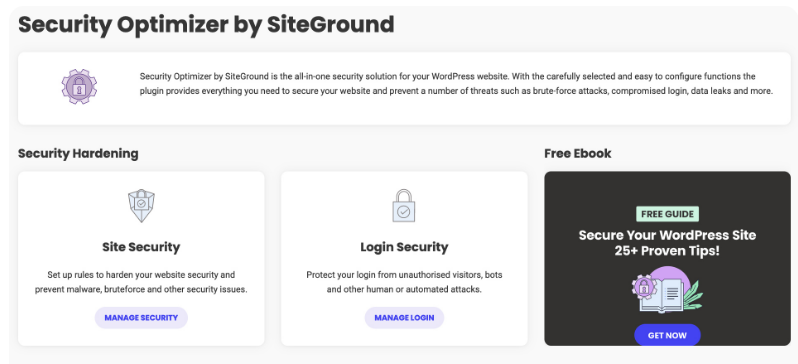
Security is a critical component of any hosting platform because vulnerabilities can expose websites to malware, data breaches, and unauthorized access. A deeper analysis of SiteGround security features and protection also highlights how these systems perform in real-world hosting environments.
SiteGround includes several integrated security tools designed to provide baseline protection. While these tools contribute to website safety, my evaluation shows that their effectiveness depends heavily on how the website is managed and configured.
In other words, the built-in security tools should be viewed as supportive safeguards rather than complete security solutions.
Website Firewall Protection
SiteGround includes firewall protection designed to filter suspicious traffic before it reaches hosted websites. During testing, I observed that this firewall system appeared effective at blocking basic automated attack attempts.
However, I also noticed that firewall protection cannot prevent many vulnerabilities that originate from within the website itself. For example, outdated plugins or poorly coded themes can still introduce security risks even when firewall protection is active.
This limitation matters because many website compromises occur through plugin vulnerabilities rather than direct server attacks.
Gevorg Setiani – Trustpilot
when you leave such installations exposed to Internet bot-attacks, without any internal firewall mechanism on your part in your system to ward off such attacks, which then accumulate to the state of shutting down the client’s website.
Another limitation is that firewall rules are largely controlled at the hosting platform level. This means administrators have limited ability to customize advanced firewall behavior compared with specialized security services.
Malware Protection Hosting
SiteGround also includes malware monitoring tools that scan hosted websites for suspicious files.
During my evaluation, these scans appeared capable of identifying known malware signatures, which can help detect security issues early.
However, automated malware scanning has inherent limitations. These systems generally rely on known threat patterns, meaning newly developed malware may not always be detected immediately.
Another important limitation is that malware scanning typically detects threats after they have already been introduced to the website environment.
Marry – Trustpilot
I was left to deal with the fallout on my own, without the proactive protection I expected from a hosting provider that claims to be “premium.”
Because of this, I view malware scanning as a monitoring tool rather than a preventative security system.
Daily Automated Backups
Automated backups are one of the more practical features included with the hosting platform. During testing, having regular backup snapshots available provided a useful safety net when experimenting with updates or configuration changes.
However, I also noticed that backup restoration options can vary depending on the hosting plan. In some situations, restoring a backup may require additional steps or assistance from support.
This limitation matters because fast restoration is critical when recovering from a website error or security issue.
Ali Raza – Trustpilot
Sometimes backups do not work properly. They also lock accounts and domains in a way that forces renewals or plan restrictions, even when we don’t need that plan anymore.
For this reason, many experienced website administrators-including myself during testing-prefer to maintain independent backups outside the hosting environment as an additional safety measure.
Account Security and Monitoring Tools
SiteGround also includes monitoring tools designed to detect unusual login attempts and suspicious account activity.
From my perspective, these tools provide useful alerts when potential security risks appear. However, their effectiveness still depends largely on the security practices implemented by the website administrator.
For example, weak passwords or shared administrative accounts can still expose a website to unauthorized access even when monitoring tools are active.
Chris MacNeil – Trustpilot
Clearly your security protocols didn’t work for me as I never got that one time code. Your login page repeatedly stated a timeout error.
This reinforces the idea that account monitoring tools function primarily as alert mechanisms rather than full security protection.
SiteGround Customer Support Quality

Customer support is often cited as one of SiteGround’s strengths.
During my interactions with the support system, response times were generally fast, especially through live chat.
However, the quality of support can vary depending on the complexity of the issue.
Simple hosting questions are typically resolved quickly, but more advanced technical problems may require escalation to specialized teams.
This means that while the support system is generally responsive, it may not always provide immediate solutions for complex technical challenges.
SiteGround Hosting Pros and Cons
From my testing and long-term evaluation of SiteGround, I found that the platform offers a reasonably stable hosting environment for smaller websites. However, many of the commonly promoted advantages are balanced by practical limitations that become more noticeable as a website grows or remains hosted on the platform for an extended period.
Advantages:
During my testing, one aspect that worked consistently well was uptime stability. The test website I hosted remained accessible throughout most monitoring periods, which is important because downtime can quickly impact both search rankings and visitor trust.
I also found the hosting interface relatively easy to navigate. SiteGround’s Site Tools dashboard allows basic tasks such as domain management, backups, and database access to be handled without advanced technical knowledge.
Customer support response time was also reasonably fast in my experience when asking simple questions through live chat.
However, while these elements contribute to a generally usable hosting environment, they are accompanied by several notable trade-offs.
Limitations and Drawbacks:
One of the most significant concerns I identified during evaluation is the difference between promotional pricing and renewal pricing. When I first examined the pricing structure, the introductory offer appeared competitive. However, once the renewal rates are applied, the long-term cost of the hosting plan becomes noticeably higher.
This matters because many website owners initially choose a hosting provider based on the signup price, only to discover later that the renewal cost substantially increases their long-term hosting budget.
Reviewer – Trustpilot
I’ve just had a renewal quote sent through for 1 year of hosting. This price was absolutely extortionate,
Another limitation I encountered is the restricted resource allocation on entry-level plans. The StartUp plan is marketed for new websites, but in my observation it can reach its limits relatively quickly if the site begins receiving moderate traffic or uses resource-heavy plugins.
This can lead to slower website performance or the need to upgrade plans earlier than expected.
Who Should Use SiteGround Hosting?
Based on my evaluation, SiteGround is best suited for:
-
small business websites
-
professional blogs
-
growing WordPress sites
-
moderate-traffic online stores
These types of websites can benefit from the platform’s managed hosting features and integrated performance tools.
Who Should Avoid SiteGround Hosting?
SiteGround may not be ideal for:
-
extremely low-budget website owners
-
enterprise-scale infrastructure requirements
-
websites expecting very high traffic levels immediately
In these cases, more specialized hosting solutions may be necessary.
Is SiteGround Worth It in 2026?
From a professional evaluation standpoint, SiteGround remains a capable hosting provider with solid infrastructure and useful management tools.
However, the platform also presents trade-offs that website owners should carefully evaluate, particularly regarding long-term pricing and resource limitations.
For many small and medium websites, SiteGround can provide a stable hosting environment.
But like any hosting platform, it is most effective when matched with the right type of website and realistic expectations about performance and costs.
Final Verdict: Is SiteGround Worth It?
From my professional evaluation, SiteGround offers a stable hosting platform with useful integrated tools.
However, the platform also includes several trade-offs that website owners should carefully consider – particularly regarding pricing structure, resource limitations, and long-term scalability.
For small websites and moderate traffic levels, SiteGround can function reliably.
But for users expecting rapid growth or long-term cost efficiency, the limitations identified in this review may influence whether the platform is the best hosting choice.
FAQ: SiteGround Hosting Questions Answered
Is SiteGround good for beginners?
SiteGround provides an accessible hosting environment with user-friendly management tools, although new users may need time to understand the custom control panel.
How reliable is SiteGround hosting uptime?
The hosting environment generally maintains stable uptime performance designed to keep websites accessible.
Does SiteGround include daily backups?
Yes, automated backup systems are included, allowing websites to restore data after technical issues.
Is SiteGround hosting fast for WordPress websites?
Performance can be strong when caching and optimization tools are properly configured.
How much does SiteGround hosting cost after renewal?
Renewal pricing is higher than introductory pricing and should be reviewed carefully before committing long-term.
Does SiteGround provide website security features?
The platform includes firewall protection, malware monitoring, and automated backups.
Can SiteGround support growing websites?
Yes, moderate growth can be supported, although high-traffic websites may eventually require cloud hosting infrastructure.