
The Hostinger renewal price is one of the most discussed concerns among customers who initially signed up for a heavily discounted promotional plan. At checkout, the introductory rate often appears extremely affordable. However, once the first billing cycle ends, the hosting plan renews at the standard retail rate – and that difference can feel significant.
In this expanded breakdown, we examine:
- Why Hostinger renewal pricing increases
- What exactly changes (and what does not)
- How much renewal actually costs across plans
- Whether the renewal price is justified
- How to evaluate long-term value
- When switching providers makes financial sense
In this detailed breakdown, we analyze why Hostinger renewal pricing increases, how much it actually costs in 2026, whether it is justified, and what you can do to reduce long-term expenses. If you’re looking for a comprehensive review of Hostinger, check out our Hostinger Review for more insights into their overall performance, features, and more.
Why Is Hostinger Renewal Price Higher After the First Term?
Hostinger renewal price is higher because the introductory rate is a temporary promotional discount, while renewal reflects the full standard retail price of the hosting service.
Promotional pricing is structured to attract long-term signups. Most users commit to 2-4 years to access the lowest advertised rate. Once that period ends, the subscription renews at standard pricing.
The gap feels dramatic because:
-
Intro discounts can reach 60-80%
-
Renewal removes that discount entirely
-
The psychological anchor remains the original low rate
From our evaluation of hosting billing structures, the renewal cost is not hidden – it is disclosed at checkout. However, users often calculate their decision based on the first-year effective monthly rate, not the long-term cost.
The increase is less about “price inflation” and more about reverting to full retail value.
User Review: Peggy D – US
Since you acknowledge that the change was not explained clearly, you also acknowledge that there was no way for me to know what “a new account” meant for me, including the higher price plan.
Hostinger Introductory vs Renewal Pricing Breakdown
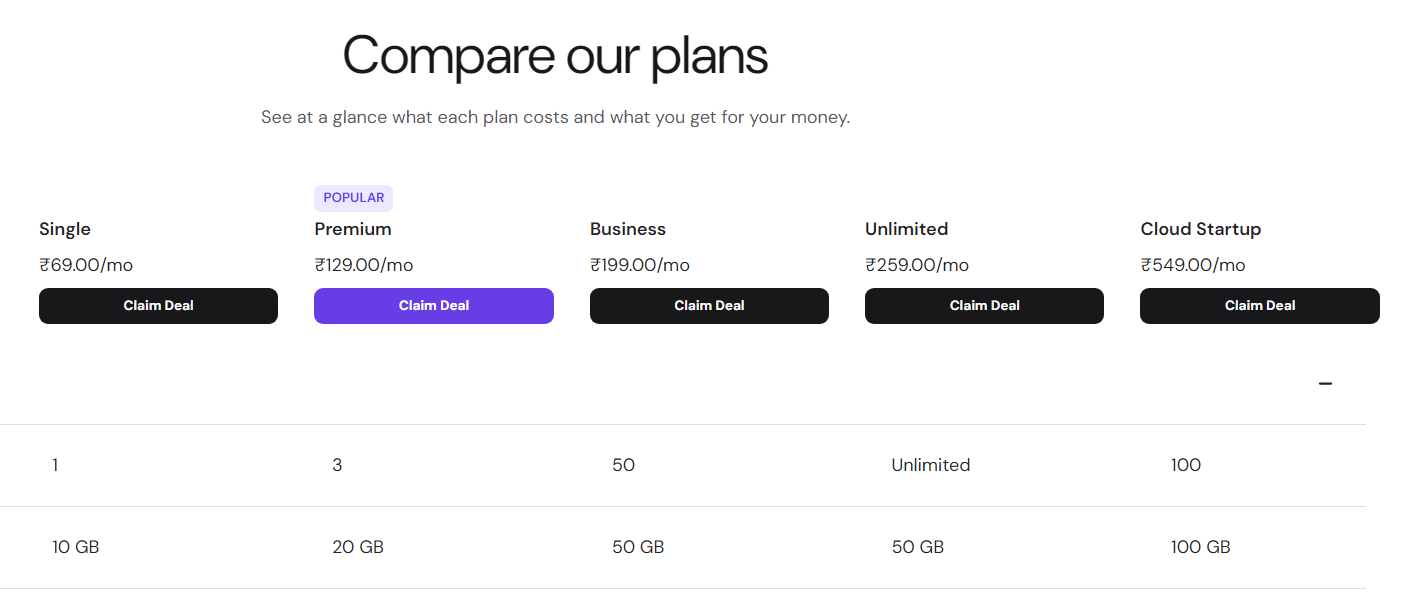
To properly understand the Hostinger renewal price, it is important to compare all included services – not just the base hosting fee.
Below is a consolidated service-level comparison illustrating how introductory pricing transitions to renewal pricing across major plan categories (illustrative 2026 structure):
Full Service Pricing Comparison Table
| Service Category | Introductory Term Pricing | Renewal Pricing | What Changes at Renewal | Included Features Remain? |
|---|---|---|---|---|
| Shared Hosting | Deep promotional discount (multi-year) | Standard monthly rate | Discount removed | Yes – SSL, basic backups, email |
| WordPress Hosting | Discounted bundled plan | Standard WP plan rate | Intro rate expires | Yes – LiteSpeed cache, auto updates |
| Cloud Hosting | Reduced intro rate | Premium cloud renewal rate | Returns to retail cloud tier | Yes – Dedicated resources, scalability |
| Domain Registration | Often free first year | Standard annual renewal fee | Free period ends | Domain ownership retained |
| SSL Certificate | Free with hosting | Usually remains free | No change | Yes |
| Backups | Weekly or daily (plan-based) | Remains plan-based | No change | Yes |
| Email Hosting | Included in most plans | Continues | No change | Yes |
| Add-ons (Priority Support, Extra Backups) | Optional discounted add-on | Standard add-on rate | Promotional add-ons may expire | Depends on selection |
The most important takeaway is this:
The service itself does not downgrade at renewal – the discount expires.
From our pricing analysis perspective, renewal cost represents full service value, not reduced service quality.
However, because introductory pricing is so aggressively marketed, the renewal increase can feel disproportionate.
Effective Multi-Year Cost Perspective
If a user commits to four years at a low introductory rate, the blended monthly cost across those four years may remain competitive even after renewal.
However:
-
One-year signups experience renewal impact sooner
-
Add-ons increase total billing more than base hosting
-
Domain renewal is separate and adds annual cost
We consistently advise reviewing the total 3-5 year cost projection before judging renewal fairness.
How Much Does Hostinger Renewal Actually Cost in 2026?
The exact Hostinger renewal price depends on:
-
Hosting tier
-
Billing cycle
-
Add-ons
-
Regional pricing variations

Below is a generalized comparison of renewal positioning within its segment:
Shared Hosting Renewal Characteristics
-
Mid-tier pricing after discount
-
Still competitive but no longer the cheapest
-
Suitable for small websites
WordPress Hosting Renewal Characteristics
-
Slightly higher than shared tier
-
Includes WordPress optimization
-
Performance-focused plans cost more
Cloud Hosting Renewal Characteristics
-
Premium pricing tier
-
Improved scalability
-
Dedicated resource allocation
At renewal, Hostinger transitions from “budget leader” to “competitive mid-tier provider.”
From our comparative evaluation, the renewal price is not extreme – but the contrast with introductory pricing creates perception of steep increase.
Is Hostinger Renewal Price Expensive Compared to Its Value?
This question requires separating pricing perception from functional value.
At renewal, Hostinger typically moves from “ultra-budget” into a mid-tier pricing position. The service itself does not fundamentally change – but its cost positioning does. For a broader perspective on the advantages and disadvantages of Hostinger, refer to our Hostinger Pros and Cons article.
Value Strengths Supporting Renewal Pricing
Even at renewal, Hostinger continues to provide:
-
LiteSpeed-powered hosting environment
-
Integrated caching for WordPress
-
Free SSL certificates
-
Email hosting
-
Managed infrastructure maintenance
-
Modern hPanel dashboard which you can compare in detail with traditional cPanel in our hPanel vs cPanel comparison
-
Stable uptime performance
For small businesses, blogs, and service-based websites, these features remain sufficient.
From our evaluation, the infrastructure is solid within the shared hosting category.
Value Weaknesses Challenging Renewal Pricing
However, renewal reduces Hostinger’s pricing advantage.
At standard pricing, users may begin comparing it with providers that offer:
-
Phone-based support
-
Smaller intro-to-renewal gaps
-
More advanced server-level tools
-
Stronger enterprise-grade SLAs
Additionally:
-
Resource limits still apply on shared plans
-
Cloud plans renew at premium-tier pricing
-
Advanced support features require upgrades
We consistently find that the renewal moment forces a reassessment not because Hostinger becomes “bad,” but because the competitive landscape becomes more balanced.
User Review: kyrylo shyshlov – ES
They raised the website hosting plan to €500 per year from €120, and domain renewals are €1.5–2 times more expensive than other companies.
When Renewal Still Makes Sense
Staying may be reasonable if:
-
Your site performs reliably
-
You are satisfied with live chat support
-
You have not encountered resource caps
-
Migration effort outweighs small savings
Switching hosting providers involves:
-
Site migration complexity
-
Potential downtime
-
DNS propagation delays
-
Temporary SEO fluctuations
From our experience reviewing hosting transitions, switching purely to avoid renewal cost is only worthwhile if meaningful feature or support advantages exist elsewhere.
When Exploring Alternatives Is Justified
Considering alternatives is rational if:
-
Renewal cost approaches providers offering stronger infrastructure
-
Your site has outgrown shared hosting limits
-
You require phone-based or priority support
-
You want more granular server control
-
You prefer a smaller promotional-to-renewal gap
In many cases, renewal pricing aligns Hostinger with mid-tier hosting competitors. At that point, value comparison becomes more about features and service quality than about headline price.
Hidden Cost Considerations at Renewal
When evaluating the Hostinger renewal price, additional cost factors should also be reviewed:
1. Domain Renewal
Free domains often apply only during the first year. After that, annual domain renewal fees apply separately.

2. Add-On Services
Optional services such as:
-
Advanced backups
-
Security scanning
-
Email upgrades
may renew at standard rates if previously discounted.
3. Resource Upgrades
Growing websites may require upgrading from shared to cloud hosting before or at renewal.
4. Payment Processing Fees
In some cases, currency conversion or tax implications may affect final billing totals.
We consistently advise reviewing the invoice line by line before renewal to avoid surprises.
User Review: Robert – NL
After the first few months, the renewal costs are significantly higher, making them more expensive than many competitors. The cheap starting price is simply a trap.
On top of that, the hosting service does not perform as it should. There are hidden costs, and you end up paying much more than expected.
Migration Costs vs Renewal Costs
Before switching providers purely due to renewal pricing, migration costs must be considered.
Switching hosts may involve:
-
Website transfer complexity
-
DNS propagation delays
-
Temporary downtime risk
-
Email migration configuration
-
SEO revalidation
From our evaluation of hosting transitions, the time and risk associated with migration may outweigh moderate renewal cost differences.
However, if renewal pricing approaches premium hosting tiers offering significantly better infrastructure or support, migration becomes a rational consideration.
Final Recommendation
The Hostinger renewal price feels high because the introductory rate was exceptionally low.
After renewal:
-
The service remains stable
-
Features remain consistent
-
Infrastructure does not downgrade
-
Pricing shifts into mid-tier territory
Hostinger is no longer the cheapest option at renewal – but it remains competitive.
From our balanced analysis, staying is reasonable if performance meets expectations and budget allows. Exploring alternatives is justified if renewal pricing narrows the gap between Hostinger and providers offering stronger support, deeper customization, or enterprise-grade reliability.
In 2026, the renewal question is less about “Is Hostinger overpriced?” and more about “Does its pricing match your website’s current growth stage?”
The decision in 2026 is not about whether Hostinger is “overpriced,” but whether its renewal cost aligns with your website’s maturity and long-term growth goals.
Frequently Asked Questions
Why does Hostinger renewal price increase so much?
Because introductory discounts expire, and renewal reflects standard retail pricing.
Does Hostinger change features at renewal?
No, services remain the same – only the pricing changes.
Is domain renewal included in hosting renewal?
No, domain renewal is billed separately.
Is Hostinger still affordable after renewal?
It becomes mid-tier priced rather than ultra-budget.
Should I switch hosting providers after renewal?
Switching is justified if you gain meaningful feature or support advantages elsewhere.
Can I reduce Hostinger renewal price?
Longer-term renewals and monitoring promotions may help lower effective cost.
Is renewal pricing common in hosting?
Yes, most hosting companies use promotional pricing followed by standard renewal rates.